Industry Knowledge
High-Speed, Serpentine, and Circular: How Each Rope Braiding Machine Architecture Determines Output Characteristics
The three principal rope braiding machine structures — high-speed braiding machines, serpentine braiding machines, and circular rope machines — are not simply speed variants of the same mechanism. Each architecture produces a fundamentally different braid geometry, which in turn determines which end products it can realistically manufacture at commercial quality. Matching machine type to product requirement is the first engineering decision in any rope production line setup.
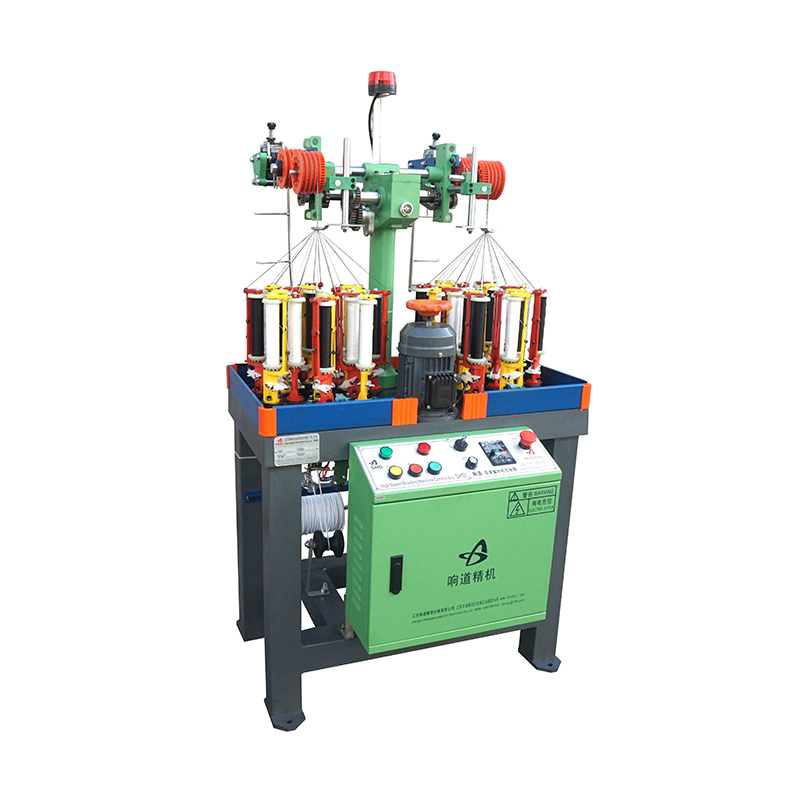
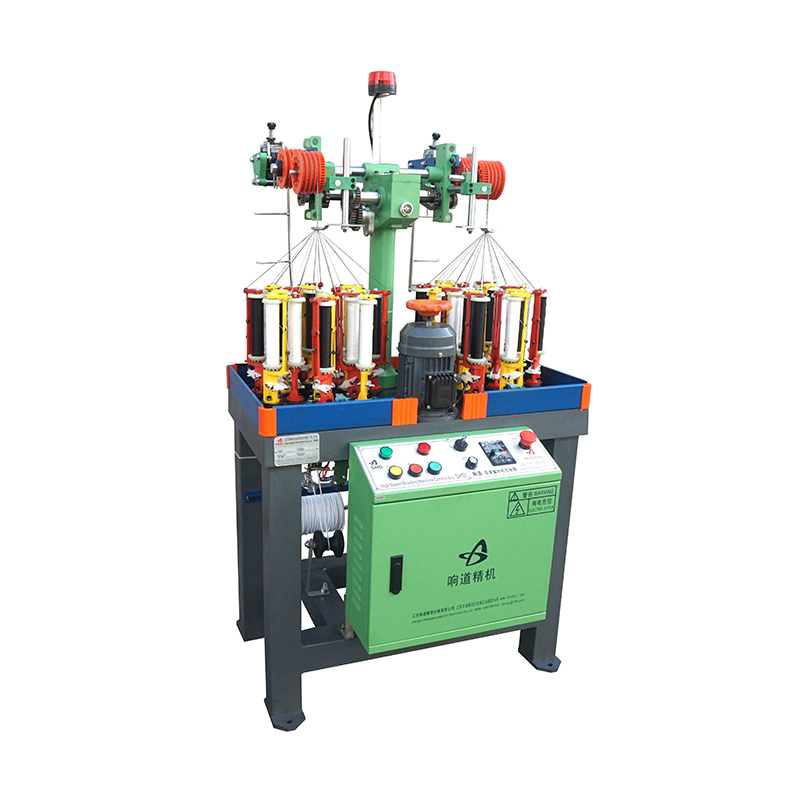
High-speed braiding machines use a maypole carrier system where bobbins travel in interlocking figure-eight paths around a central point. The crossing frequency is high, producing a tight, dense interlace with consistent surface texture — well suited to shoelaces, decorative cords, and gift bag ropes where appearance and uniformity matter as much as tensile strength. The defining advantage is throughput: production speeds of 80–150 m/min are achievable on fine-thread applications, which no other braiding architecture can match at equivalent quality.
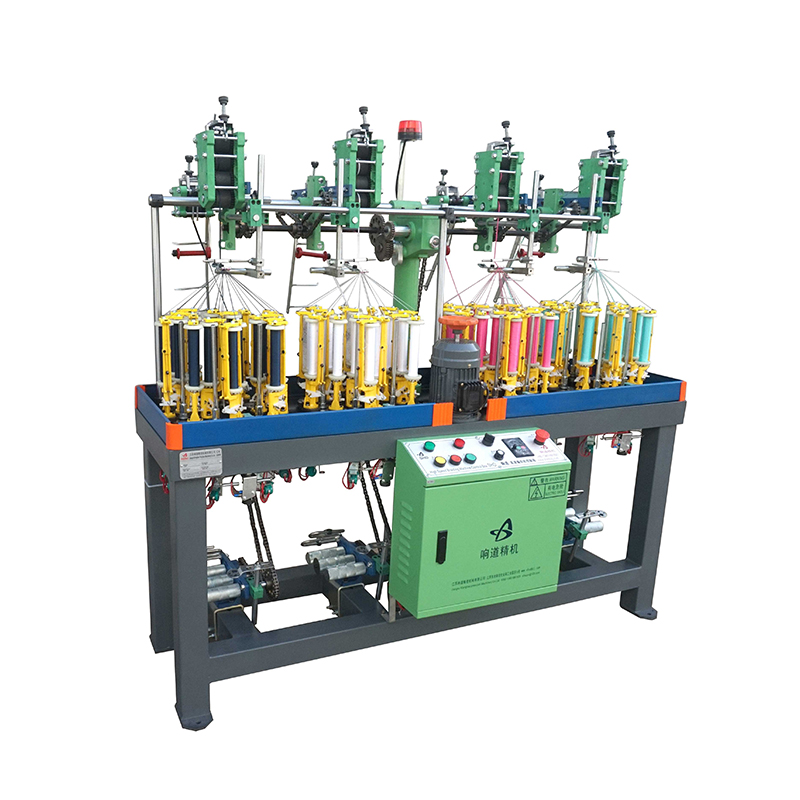
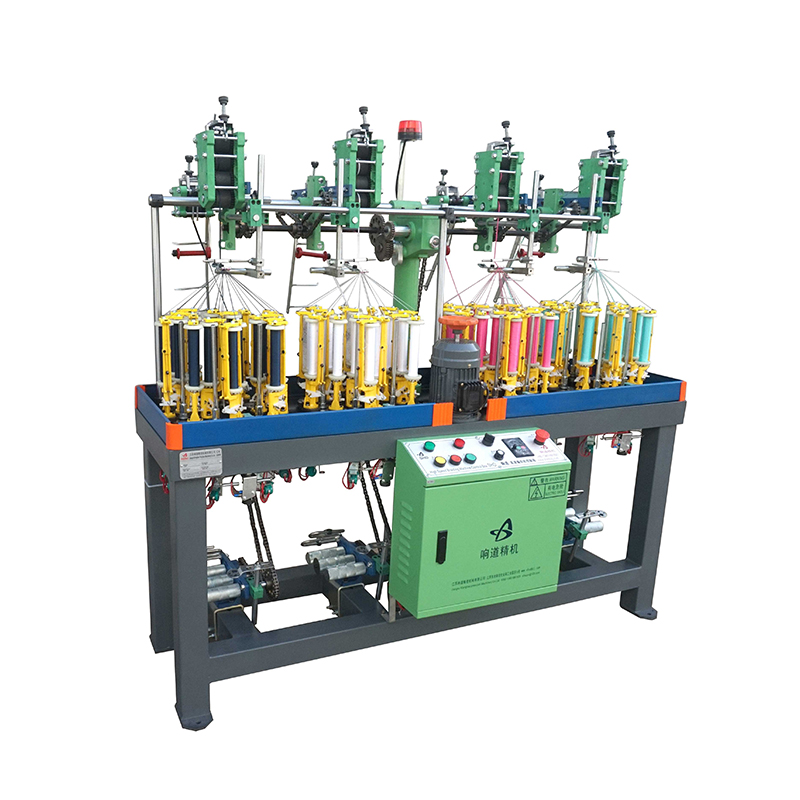
Serpentine braiding machines move carriers in sinusoidal (wave-pattern) tracks rather than circular paths. This geometry produces flat or semi-flat braid structures that are difficult or impossible to achieve on circular maypole machines. Flat braids are essential for applications like bag handles, luggage straps, and decorative ribbons where the woven surface must lie flat against a substrate. The serpentine path also allows wider braid widths than circular machines of equivalent footprint.
Circular rope machines produce round braids with a hollow or solid core, depending on whether a core yarn is fed through the center mandrel. The circular geometry applies even tension from all carrier positions simultaneously, which is the mechanical reason circular-braided ropes have superior roundness and concentricity compared to twisted or serpentine-braided alternatives. This matters for hanging ropes and luggage ropes where the rope must feed cleanly through eyelets, handles, or cam cleats without binding.
Carrier Count and Braid Angle: The Two Variables That Control Rope Braiding Machine Output Quality
Every rope braiding machine specification sheet lists carrier count and take-up speed, but the relationship between these two numbers — and the braid angle they determine together — is rarely explained in practical terms for procurement or production planning purposes. Understanding it directly informs machine selection and production parameter setup.
Carrier count determines how many yarn ends are interlaced in a single pass around the braid circumference. Higher carrier counts produce denser braids with more interlacing points per unit length — which translates to higher abrasion resistance and a smoother surface finish. Lower carrier counts produce open braids with larger interstices, which may be intentional (for breathable textile applications) or a limitation of the machine's mechanical capacity. Common carrier counts by application:
| Carrier Count |
Braid Structure |
Typical Application |
Key Output Characteristic |
| 8–12 carriers |
Open, lightweight braid |
Gift bag ropes, lightweight hanging cords |
Fast production, lower material cost |
| 16–24 carriers |
Medium-density braid |
Shoelaces, decorative ropes, bag handles |
Good surface finish, balanced strength |
| 32–48 carriers |
Dense, tight braid |
Luggage ropes, load-bearing straps |
High abrasion resistance, premium appearance |
| 64+ carriers |
Ultra-dense technical braid |
Industrial rope, technical textile applications |
Maximum coverage, specialized equipment required |
Braid angle — the angle at which yarn ends cross relative to the rope axis — is controlled by the ratio of carrier rotation speed to take-up (haul-off) speed. A steep braid angle (closer to 90°) produces a rounder, more flexible rope that compresses well laterally — preferred for shoelaces and hanging ropes that pass through eyelets. A shallow braid angle (closer to 0°) produces a stiffer, elongation-resistant structure better suited to luggage ropes and load-bearing applications where dimensional stability under tension matters more than flexibility. Production engineers adjust take-up speed to dial in the target braid angle without changing the machine's carrier configuration.
Yarn Tension Management on a Rope Braiding Machine: The Hidden Driver of Weaving Density Consistency
Stable operation and high weaving density — the two most commonly cited performance attributes of a rope braiding machine — are both downstream consequences of yarn tension management. A machine that cannot maintain consistent tension across all active carriers will produce braids with density variations, surface irregularities, and diameter fluctuations that are immediately visible in finished products and cause reject rates to climb even when all other parameters are correctly set.
Tension in a braiding machine is generated and maintained by the bobbin carrier's spring or magnetic tensioning mechanism. As yarn pays off a bobbin, the bobbin diameter decreases — from full to empty, the effective yarn delivery radius can shrink by 60–70%. Without active tension compensation, this diameter change causes the yarn tension to increase progressively as the bobbin depletes, because the same spring force acts on a shorter moment arm. The result is a braid that becomes measurably tighter and denser as production continues between bobbin changes.
Modern high-speed braiding machines address this through one of three compensation approaches:
- Spring-loaded tensioners with adjustable preload: The baseline approach. Operators set spring tension at the start of a run and accept gradual variation as bobbins deplete. Suitable for coarse applications where ±5% density variation is acceptable.
- Magnetic brake tensioners: Apply constant braking torque regardless of bobbin diameter, providing more consistent tension across the bobbin depletion cycle. Better suited for fine-thread applications like shoelaces and decorative ropes where surface uniformity is a visible quality indicator.
- Electronic servo tensioning (on advanced machines): Real-time tension feedback loop adjusts braking force continuously based on yarn speed sensor data. Achieves tension variation below ±1% across the full bobbin cycle — the specification required for technical textile braiding and premium apparel cord production.
For manufacturers producing gift bag ropes and packaging cords at high volume, spring or magnetic tensioning is typically sufficient and cost-effective. For apparel cords, branded shoelaces, and decorative ropes where surface consistency is inspected by retail buyers, magnetic or electronic tensioning is worth the equipment investment — the reduction in reject rate alone typically offsets the cost differential within 12–18 months of production.
Material Compatibility and Bobbin Setup: Configuring a Rope Braiding Machine for Different Yarn Types
Rope braiding machines used in daily necessities, packaging, and apparel production routinely process a wide range of yarn materials — polypropylene (PP), polyester (PET), nylon (PA), cotton, and blended yarns — each of which behaves differently under the tension and bending cycles of the braiding process. Configuring the machine correctly for each material type is not a minor adjustment; it affects carrier type selection, bobbin capacity, tensioner setting, and take-up speed.
Polypropylene (PP) Yarn
PP is the dominant material for gift bag ropes, packaging cords, and low-cost decorative ropes due to its low density, moisture resistance, and low raw material cost. It is also the most elastic of the common synthetic yarns — elongation at break of 15–25% — which means braid angle must be set shallower than for polyester to achieve equivalent rope stiffness. PP yarn also has relatively low melting point (160–170°C), so high-speed braiding machines running at maximum carrier speed may generate enough friction heat at crossing points to cause surface fusing on fine-count PP yarns. Operators running fine PP on high-speed machines should verify crossing-point temperature with an infrared thermometer and reduce speed if surface glazing appears.
Polyester (PET) Yarn
Polyester offers higher tensile strength, lower elongation (10–15% at break), and better UV resistance than PP at moderate cost premium. It is the preferred material for luggage ropes, bag handles, and hanging ropes where load-bearing performance and color fastness under UV exposure are relevant. PET yarn has higher stiffness than PP, which means tighter bobbin winding tension is needed to prevent loose layers on the bobbin from riding up during carrier travel — a mechanical jam source that causes machine stops and waste at reel changes.
Cotton and Blended Yarns
Natural cotton and cotton-synthetic blends are used for premium decorative ropes, apparel cord, and shoelaces in the fashion market. Cotton's lower tensile strength and higher surface friction compared to synthetics require gentler tension settings and slower take-up speeds to avoid yarn breakage, which increases cycle time per meter. However, cotton braided ropes accept dye more readily and produce richer color depth than synthetic alternatives — a relevant quality advantage in decorative rope and apparel cord markets where color vibrancy is a retail selling point.
Precision Components Inside a Rope Braiding Machine: Where Fastener Quality Directly Affects Production Stability
A rope braiding machine operates through the coordinated movement of dozens to hundreds of mechanical components — carriers, track plates, horn gears, and take-up rollers — all cycling at high frequency for extended production runs. The fasteners that secure these components are not passive hardware; they are active participants in maintaining the dimensional stability and timing precision that stable operation and high weaving density depend on.
Several fastener failure modes are specific to the braiding machine environment and are worth understanding for maintenance planning:
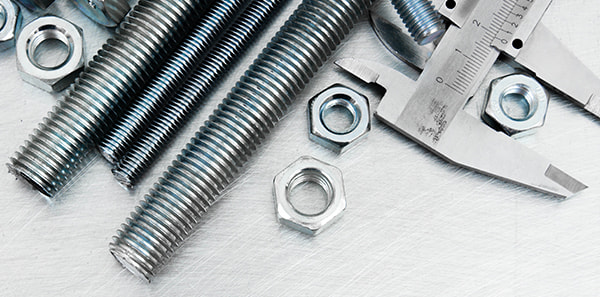
- Vibration-induced loosening on horn gear mounting bolts: Horn gears — the rotating elements that transfer carriers between track segments — are subject to high-frequency reversing loads as they mesh with carrier followers. Bolts securing horn gears to their shafts are exposed to vibration that can progressively loosen standard fasteners below the designed clamp load. Thread-locking compound or prevailing-torque locknuts are standard solutions; the fastener must also be specified in a strength grade (8.8 or higher per ISO 898-1) appropriate for the dynamic load.
- Track plate fastener creep under thermal cycling: High-speed braiding machines generate localized heat at carrier crossing points. Track plate mounting fasteners in these zones experience thermal expansion and contraction cycles that can cause bolt preload to relax over time — a phenomenon called thermal creep. Specifying bolts with controlled yield strength and checking torque on track plate fasteners as part of scheduled maintenance prevents the track misalignment that causes carrier jams and braid defects.
- Take-up roller shaft fasteners under continuous radial load: The take-up (haul-off) system applies continuous tension to the finished braid, which translates to radial load on the roller shaft bearings and their housing fasteners. Under sustained load rather than dynamic cycling, fastener selection shifts to prioritize shear strength and bearing area rather than fatigue resistance.
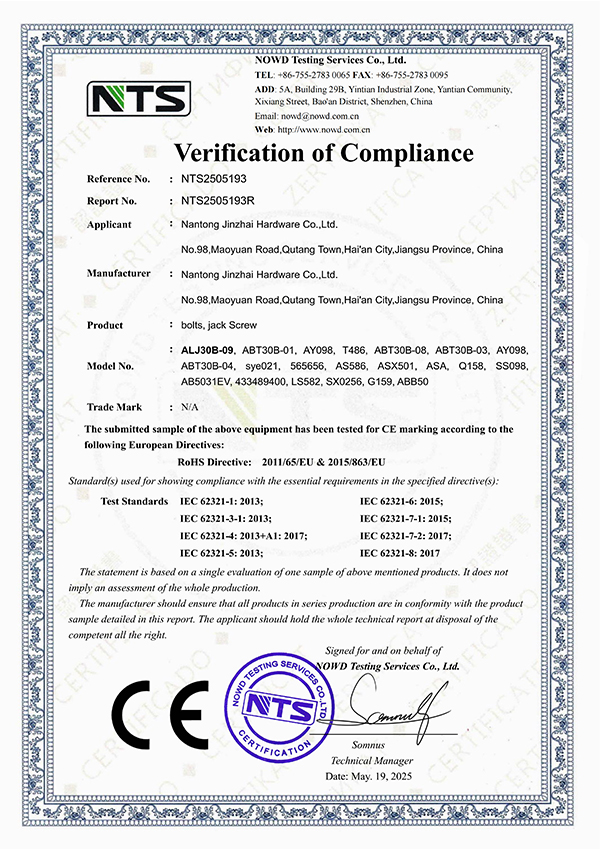
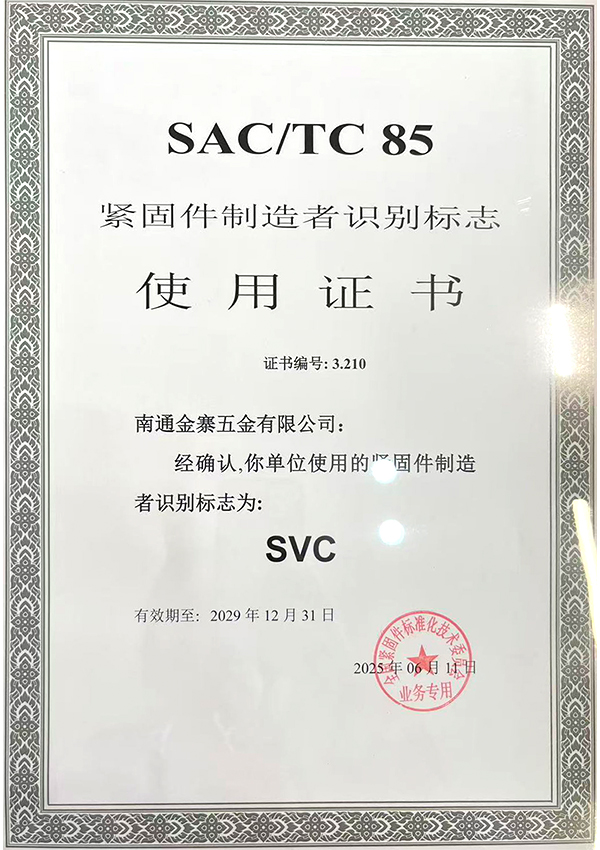
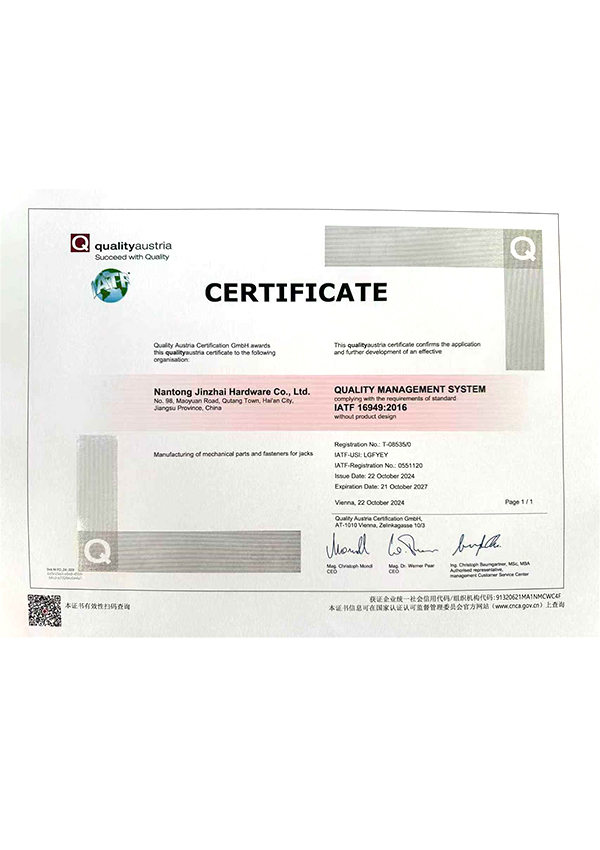
Shanghai Soverchannel Industrial Co., Ltd., through its manufacturing subsidiary Nantong Jinzhai Hardware Co., Ltd., produces high-precision bolts, nuts, and customized special-shaped fasteners that are directly applicable to textile machinery maintenance and OEM assembly contexts. The company's deep experience in automotive fastener applications — where vibration resistance and dimensional precision are equally critical — translates naturally to the braiding machine environment, where the same failure modes appear in a different mechanical context. For braiding machine manufacturers or maintenance operations seeking non-standard fastener configurations for specific machine assemblies, Soverchannel's custom special-shaped component capability offers a practical sourcing path beyond catalog hardware.
Production Line Integration: Connecting a Rope Braiding Machine to Upstream and Downstream Processes
A rope braiding machine rarely operates in isolation. In a commercial rope or ribbon production facility, it sits between upstream yarn preparation equipment and downstream finishing processes, and the efficiency of the entire line depends on how well these stages are physically and operationally integrated. Line integration decisions made at the facility planning stage have long-term consequences for changeover time, waste rates, and labor requirements that are difficult to reverse once equipment is installed.
Upstream: Yarn Winding and Bobbin Preparation
Braiding machine carriers accept yarn from bobbins wound to a specific diameter, traverse pattern, and tension profile. Bobbins wound too tightly cause yarn over-tension during braiding; loosely wound bobbins allow yarn layers to collapse and tangle inside the carrier, causing machine stops. A dedicated precision winder matched to the braiding machine's bobbin specification — rather than using whatever bobbins the yarn supplier provides — is the upstream investment that most directly reduces mid-run stoppages. The number of spare bobbins needed per machine head is determined by the ratio of bobbin depletion time to winding time; under-provisioning this ratio creates a bottleneck that limits effective machine utilization.
Downstream: Cutting, Tipping, and Packaging
For shoelace production, the braiding machine output must be cut to precise lengths and the ends tipped (heat-sealed or fitted with aglets) before packing. Integrating a servo-controlled cut-and-tip station directly inline with the braiding machine's take-up system eliminates the intermediate coiling and manual re-feeding step, which accounts for a significant portion of labor cost in high-volume shoelace operations. For gift bag ropes and decorative cords, inline color printing or embossing immediately after braiding — while the rope is still under controlled tension on the take-up system — produces more consistent pattern registration than offline printing on loose rope.
Quality Control Integration
Inline diameter measurement sensors placed between the braiding machine and the take-up spool allow real-time detection of braid diameter variation — the primary quality indicator for density consistency. When diameter deviates beyond the set tolerance band, the sensor triggers an alert before a significant length of out-of-spec product is produced. This catch-at-source approach to quality control is standard practice in European and Japanese rope production facilities and is increasingly being adopted by Chinese manufacturers serving export markets with tight specification requirements.
Selecting a Rope Braiding Machine for Multi-Product Production: Flexibility vs. Optimization Trade-Offs
A manufacturer producing gift bag ropes, shoelaces, decorative ropes, luggage ropes, and hanging ropes within the same facility faces a fundamental equipment strategy decision: invest in specialized machines optimized for each product type, or invest in flexible machines capable of running multiple product types with changeover. The right answer depends on production volume mix, order frequency, and the manufacturer's positioning in the market — and getting it wrong is expensive in either direction.
The case for specialized machines is strongest when one or two product types dominate volume. A facility where 70% of output is shoelaces benefits from high-speed braiding machines optimized for fine-thread, high-speed operation — machines that would be running below their capability if reconfigured for coarser luggage rope production. Specialization maximizes output per machine-hour on the dominant product and simplifies process control.
The case for flexible machines is strongest in facilities serving diverse customers with frequent small orders — the typical profile of a packaging and daily necessities rope supplier serving multiple retail brands. Here, the ability to switch a serpentine braiding machine between flat ribbon for bag handles and round cord for hanging ropes within a single shift, with a 30-minute changeover, is more valuable than the marginal speed advantage of a single-purpose machine. Key flexibility features to specify when evaluating braiding machines for multi-product production:
- Quick-change carrier systems: Tool-free carrier swap mechanisms that allow bobbin gauge changes without disassembling the carrier track — reducing changeover time from 2–3 hours to under 45 minutes for gauge switches.
- Variable speed drive with programmable take-up ratios: Electronic speed control that stores braid angle settings per product code, allowing operators to recall a saved parameter set rather than manually recalculating and re-setting take-up speed ratios at each changeover.
- Adjustable core yarn feed: For circular rope machines, the ability to switch between hollow-braid and core-filled configurations without track modifications expands the product range accessible from a single machine investment.
- Modular track plate design: Track plates that can be reconfigured to change carrier count within the same machine frame — allowing the same machine to run 16-carrier and 24-carrier setups — provide a degree of product range flexibility that fixed-track machines cannot match.
For manufacturers at the stage of facility planning or equipment upgrade, the flexibility-vs-optimization decision is best made against a 3-year demand forecast rather than current order mix — product range in the rope and ribbon market shifts with fashion trends and retail packaging cycles in ways that can make a highly specialized machine line look poorly planned within 18 months of installation.